Gnosis in a Hundred Pages

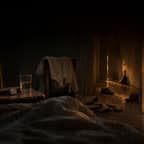
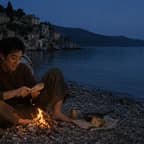
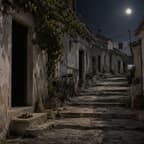
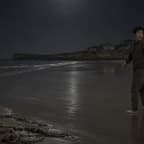
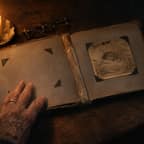
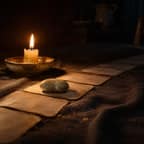
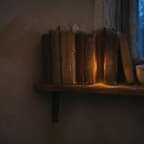
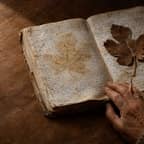
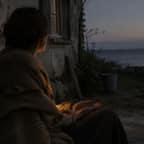
An open book on a stone ledge by the night shore, its pages glowing like a lamp.
Free

A free book by Gene Hart

Gnosis in a Hundred Pages, free for everyone

The essentials of Gnosis, a page at a time.

  • 100 short pages
  • Something to try on each
  • Read to you, in two voices
Begin with page 1

The whole book is open to everyone, with no sign-in. Sign in to keep your place on every device. It is free.

Before you beginHow to read it. One minute.

This is a book in a hundred short pages. Read one a day, or two, or the same one twice.

Every page ends with something to try. The trying is the book. The reading only points to it.

Nothing here is counted or checked. If you miss a day, you missed a day. Open the book again where you left it.

You do not have to believe anything to begin. Each page describes something and asks you to look for yourself.

The book is free and for anyone. A few later pages speak plainly about the body and sexuality. Those are written for adults, and they say so.

Contents

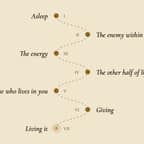
Seven parts, a hundred pages.

Part I: AsleepPages 5–17 · the state we are in

These thirteen pages are about seeing. Nothing in them asks you to change yet. They ask you to look.
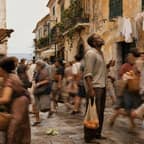
  1. 5You are asleep, and that is good newsMost of the day the body walks while the one inside it sleeps. Seeing that is the first moment of waking.
  2. 6Something in you is already awakeUnder all the habits is a small part of you that is entirely your own. It is what wakes.
  3. 7The machineMost of what we do is a reaction. Changing your life means changing your reactions.
  4. 8Three brainsYou think, you feel and you move, and each is run by its own center. Much trouble comes from the wrong one doing the job.
  5. 9Many selves in one bodyThere is not one “I” in you but many, and each speaks as if it were the whole of you.
  6. 10The borrowed faceYour personality was learned, mostly before you were seven. It is a tool, not who you are.
  7. 11Lost in the filmWhen you are absorbed in something and forget yourself, you are asleep. The books call it identification.
  8. 12The daydreamMost of the mind’s pictures are daydreams that run on their own. Your imagination is capable of far more.
  9. 13The pendulum and the still pointLife swings between opposites: joy and pain, praise and blame. You can live at the center instead of at the ends.
  10. 14Watching yourselfSelf-observation means watching your thoughts, feelings and actions as they happen, the way a kind friend would.
  11. 15Three questions that wake youWho am I, what am I looking at, and where am I? Asked in earnest, they bring you all the way here.
  12. 16Fear lives in the body firstBefore fear has a reason, it has a place in the body. Finding that place is the first step out of it.
  13. 17A day, and the evening reviewThe practices of Part I make one shape across a day. At night, you walk the day backward.
Part II: The enemy withinPages 18–34 · ending what is false

In Part I you saw that many selves speak with your voice. These seventeen pages are about meeting them one at a time, and about the old method for ending them.

Nothing here asks you to hate yourself. A self that is hated hides. A self that is seen can end.
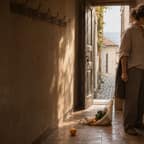
  1. 18What a self isEach self in you has its own thoughts, its own feelings and its own way of moving the body. It arrives, takes over, and leaves.
  2. 19No shame, but your workThe selves are older than your memory. Shame will not end them, but you are the only one who can.
  3. 20Three steps outEvery self ends the same way. It is seen, it is understood, and then it is let go.
  4. 21Catching a self in the actThe selves show themselves when life rubs against you. The moment something stings is the moment to look.
  5. 22PridePride is the self that cannot bear to be wrong, small or unnoticed. It often passes for dignity.
  6. 23AngerAnger feels like justice. It always has a case, and the case is usually a disguise.
  7. 24LustAttraction and the body are not the problem. Lust is the self that wants to use them, and people, to fill itself.
  8. 25EnvyEnvy watches other lives so closely that it forgets to live its own.
  9. 26GluttonyGluttony is wanting more than you need. Today it eats far more than food.
  10. 27Greed, and moneyNeeding money is part of life. Greed is the self that is never full, and it usually runs on fear.
  11. 28LazinessLaziness is the self that puts off what matters. It is often very busy.
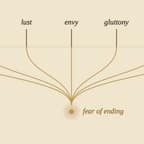
  12. 29What every self is afraid ofLook under any self long enough and you find fear. Every self is afraid of ending.
  13. 30Understanding one selfIn quiet, you replay a scene where a self took over, and watch it until you understand it with your heart.
  14. 31Asking for it to be takenUnderstanding a self is not enough to end it. The tradition teaches that it is removed by a power in your own deeper being, and that you can ask.
  15. 32The evening review, one self at a timeAt night the review becomes a search: not the whole day as a story, but the moments where a self took over.
  16. 33The self that scolds youHarsh self-criticism feels like taking the work seriously. It is one more self, and it stops the work.
  17. 34Why the same scenes returnYour circumstances tend to match what you are inside. When a self ends, the scenes it played in begin to end too.
Part III: The energyPages 35–49 · gathering what was spent

In Part II you met the selves. They feed on something, and it is yours: your energy. These fifteen pages are about the finest energy you have, how it leaks away, and how to keep it and turn it upward.

Several pages speak plainly about sexuality. They are written for adults, and they say so. Nothing here asks you to be ashamed of your body.
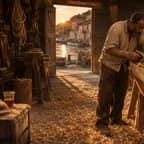
  1. 35The finest energy you haveYour body makes many energies. The finest of them is the creative energy, the same force that can make a child.
  2. 36Why you feel emptyThe energy is not lost all at once. It drains through a hundred small leaks, most of them in your attention.
  3. 37Three ways to waste it, one way to keep itMost people spend the creative energy, fight it or feel ashamed of it. There is a fourth way: to raise it.
  4. 38The breath that raises itA long breath in, a short breath out. Done for a few minutes, it lifts the creative energy and quiets the mind.
  5. 39Five sounds in the bodyFive vowels, sung slowly, each sound in a different part of the body. The books say they wake faculties that sleep there.
  6. 40The couple’s pathFor a loving couple, the tradition teaches a way of making love in which the energy is kept and raised rather than spent.
  7. 41If you are aloneYou do not need a partner to keep and raise the energy. The breath, the vowels and a watchful imagination are enough.
  8. 42The fire, and the Mother who raises itThe kept energy wakes a fire at the base of the spine. It rises by grace, slowly, according to what is in the heart.
  9. 43What chastity means hereChastity here is not a life without love. It means not spending the creative energy, in the body or in the imagination.
  10. 44Desire is not loveDesire wants something for itself. Love wants the good of the other. From inside, they can feel almost the same.
  11. 45The other leaksAnger, worry, idle talk and tension spend the same energy more slowly. Closing them keeps what you raise.
  12. 46What the kept energy buildsThe books teach that the energy, kept and raised, builds new inner bodies, much as it can build a child.
  13. 47Fear, the third timeFear is energy with nowhere to go. Given breath and a direction, the same force can become steadiness.
  14. 48A first weekThe practices of this part fit into one ordinary day beside the ones you already know. Here is a shape for seven days.
  15. 49What to expect, and what not toWarmth, vivid dreams and stronger moods are common. Visions on demand are not. The truest sign is a steadier life.
Part IV: The other half of lifePages 50–64 · the night

You sleep a third of your life. These fifteen pages are about that other half: what happens there, how to remember it, and how, slowly, to wake inside it.

The last four pages turn to the deepest sleep, death, and to what returns. They are written to make life lighter, not darker.
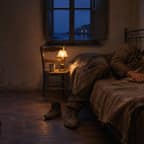
  1. 50You sleep a third of your lifeAbout a third of every life is spent asleep. The tradition of Gnosis calls it the other half of life, and most people miss all of it.
  2. 51Everyone goes out at nightWhen the body sleeps, the part of you that thinks and feels leaves it for a while. Everyone does this every night. Almost no one is awake for it.
  3. 52A dream is a mirrorMost dreams are not messages from outside. They are your own selves, acting out at night what they hide by day.
  4. 53Catching the nightA dream begins to fade the moment you move. The first minute after waking decides how much of the night you keep.
  5. 54Are you dreaming now?In dreams the strangest things seem normal. A question asked often by day will one night be asked in a dream, and you will wake up inside it.
  6. 55Two ways to wake at nightWaking inside a dream and leaving the body are not the same. Both are worth having, and for most people the first comes first.
  7. 56The crossing at the edge of sleepBetween waking and sleep there is a narrow door. With the body still and one sound in the mind, you can pass through it awake.
  8. 57Waking in the nightThe easiest time to cross is not when you first lie down. It is after a few hours of sleep, when the body is still tired and the mind is clear.
  9. 58Once you are outThe first moments outside the body are unsteady. Your hands steady you, one act is enough, and you can always come back.
  10. 59Fear, the fourth timeLeaving the body is natural and safe. The one real danger at night is fear itself.
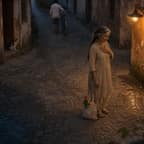
  11. 60A place to go: the IslandA mind with a destination stops watching itself. Give the night a place to go, and the crossing happens on the way.
  12. 61What death isSleep and death are the same door at different depths. What ends is the body. What goes on is what you have made of yourself.
  13. 62A good deathTo pray for a good death is not to wish for death. It is to ask to go awake, unafraid and light, whatever shape the door takes.
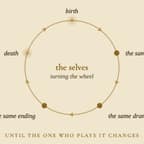
  14. 63The same life, againThe books teach that a life comes back: the same dramas, the same meetings, at much the same ages. It goes on until something in you changes.
  15. 64Remembering earlier livesThe way back to earlier lives begins with this one. The evening review, carried further back, opens the memory a little at a time.
Part V: The one who lives in youPages 65–79 · the inner Being

Behind the selves, and behind the nights, there is someone. These fifteen pages are about the one who lives in you: what the tradition calls the Being, and the ways it has always been reached.

Here stand the old maps: the Tree of Life, the bodies, the chakras, the tarot and the zodiac. Each gets one page. A map is useful only if it shows you where you are, so each page ends with something to do today.
  1. 65The one who has never been asleepBehind the selves there is someone who has never been asleep. The tradition calls it the Being.
  2. 66The Mother, againThe Divine Mother has appeared three times in these pages. She is the part of your own Being that removes what you have understood, raises the fire and guides you home.
  3. 67Christ is not a personIn the tradition, the Christ is not one man. It is a living fire and light that can be born in anyone.
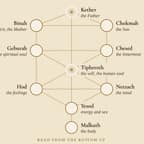
  4. 68The Tree of LifeThe Kabbalah draws a human being as ten spheres on a tree. It is a map of who you are, from the body up to the Father.
  5. 69The bodies you have, and the ones you buildYou have a physical body and, the books teach, subtler ones. Some are lent by nature. The finer ones are built by the work.
  6. 70The chakrasAlong the spine there are seven centers, the chakras. The kept energy wakes them as it rises, and the heart is the door between the lower and the higher.
  7. 71What meditation isMeditation is not relaxation and not thinking. It is the mind falling still, so that something truer can be known.
  8. 72How to sitRelaxation, the breath, concentration and absorption: four stages, one after the other.
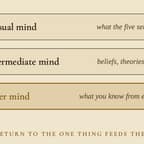
  9. 73Three mindsThe tradition speaks of three minds: one ruled by the senses, one by beliefs, and an inner mind that knows from experience.
  10. 74Imagination, inspiration, intuitionInner knowing grows in three steps: seeing an inner image, being moved by it, and then simply knowing what it means.
  11. 75Prayer that waits for an answerPrayer in the tradition is not begging and not reciting. It is speaking to your own Being, and then listening.
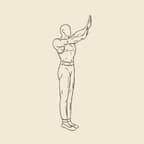
  12. 76Standing as a sign: Fa at sunriseThe old runes are signs made with the body. The first of them, Fa, greets the rising sun and wakes you for the day.
  13. 77Twenty-two steps on one roadThe tarot, in the tradition, is not fortune-telling. Its twenty-two great cards are a map of the path, step by step.
  14. 78The sun’s yearThe twelve signs of the zodiac are not twelve kinds of people. They are twelve seasons everyone lives through, each with its own work.
  15. 79This is the timeThe tradition teaches that humanity has entered a new age. What that asks of you is simple: do not postpone the work.
Part VI: GivingPages 80–88 · for others

Everything so far has been for you: waking, dying to the selves, gathering the energy, the night, the Being. These nine pages are about what it is all for.

The tradition gives the answer in three words: sacrifice for others. It does not mean suffering for show. It means that the light you find is not yours to keep.
  1. 80The third factorThe tradition names three factors of the inner work: dying to the selves, the birth of what is new, and sacrifice for others. The third holds the other two together.
  2. 81Love is the whole lawEvery tradition ends in the same place: love. The tradition of Gnosis adds one word. Love must be conscious.
  3. 82Service without a selfA good deed done to be seen feeds a self. The same deed done quietly, for the other’s sake, feeds the Being.
  4. 83Teaching by beingThe surest way to share what you have found is not to talk about it. It is to become it, so that others can see.
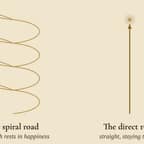
  5. 84The two roadsThe books describe two ways forward on the path: a long, gentle one that rests in happiness, and a direct one that keeps giving. The choice belongs to later. Its seed is planted now.
  6. 85Why we do this togetherThe inner work is done alone, but not in isolation. A circle shows you yourself, and gives you a place to give.
  7. 86The spiritual selfThere is a self that grows out of the work itself: the one who wants to be seen as spiritual. It is one of the hardest to catch.
  8. 87The Master withinFollow no one blindly, this book included. The real Master is found within, and everything you are told is for you to verify.
  9. 88The three togetherDeath, birth and sacrifice are three sides of one work. Leave any one out, and the other two go wrong.
Part VII: Living itPages 89–100 · a life, not a lesson

A hundred pages read once change very little. The same pages lived change a life. These last twelve pages turn the book into a day, a week and a life: what to do on waking, through the day, in the evening and at night.

They teach almost nothing new. They gather what you have already learned into a shape you can keep. Where a practice was taught in full, the page sends you back to it.
  1. 89MorningThe first ten minutes of the day decide much of what follows. Begin awake, and the day remembers.
  2. 90Through the dayThe day brings impressions: words, faces, news, insults. Received asleep, they feed the selves. Received awake, they feed you.
  3. 91EveningThe day is looked at backward, once. One self from it is understood in stillness. Then the day is set down.
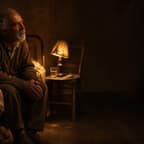
  4. 92NightThe last minutes before sleep shape the night. A journal within reach, an intention, and one sound or prayer to carry you down.
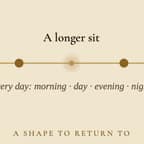
  5. 93The week, as a shapeA week is the right size for a practice to take root. Give it a simple shape: the daily rhythm, one longer sitting, and one look back.
  6. 94The bad daysThere will be days when every practice fails and every self wins. Falling is part of the practice. Shame is not.
  7. 95False pathsThe path has detours that look like progress: chasing powers, hungering for signs, following someone who wants followers. They are easy to spot once named.
  8. 96Where to read nextThis book is a doorway. Behind it stand longer books and free courses, each going deeper into one part of what you have read.
  9. 97The road far aheadThe books describe a long road beyond the beginning: three mountains, climbed over many years. It is for later. Knowing it is there helps now.
  10. 98The lamp and the keyThe whole book in one page: you are asleep, the selves keep you asleep, the energy wakes you, the night shows you, the Being waits, and the light is for giving.
  11. 99Your linesMany pages asked you to write a line. Those lines are a second book, and it is yours.
  12. 100The last page is the firstThe book ends where it began. Read page one again, and you will find it is a different page, because you are a different reader.

The whole book is open to everyone. Sign in to keep your place on every device, and to write your own lines in it.

Sign in to keep your place

It is free. No password, just a code sent to your email.